Travel writing
THE CITY OF RUINS AND BELONGING
NOV 2018
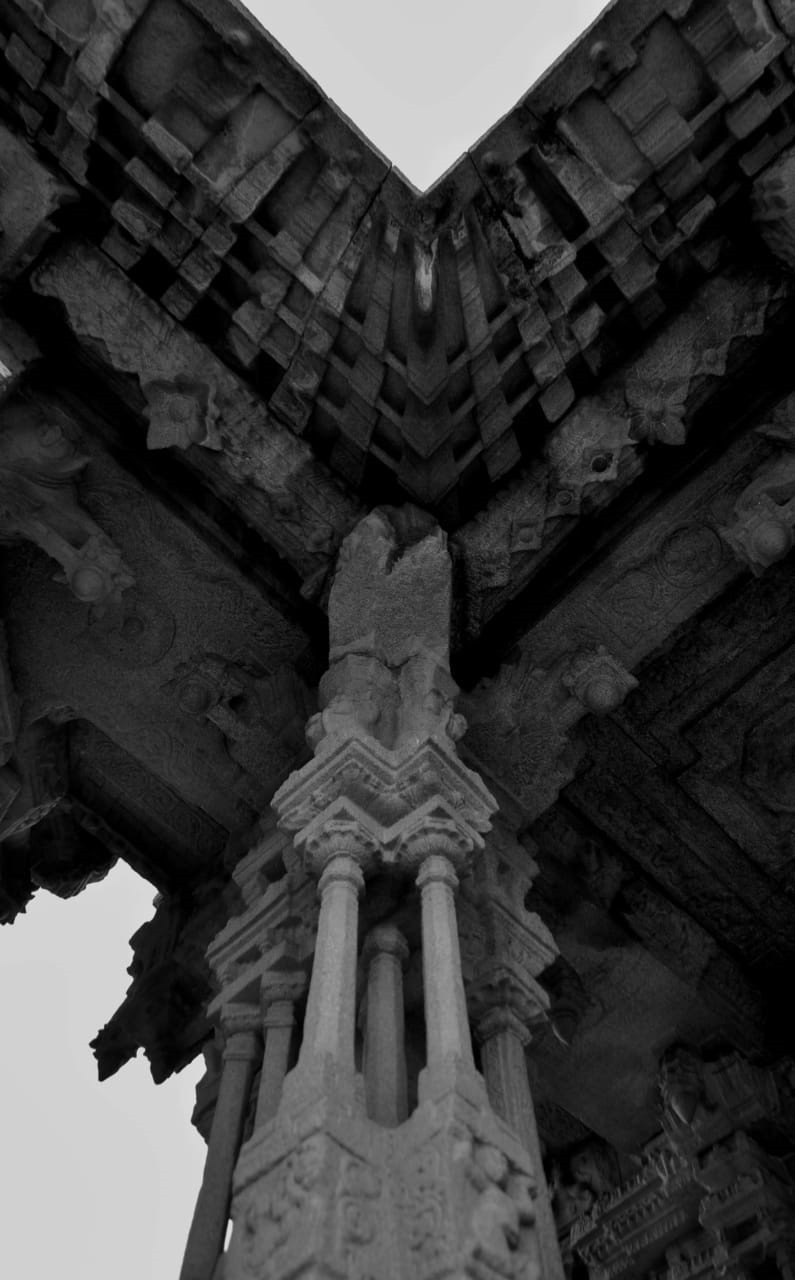
It was early dawn when we reached Hampi. The bus stopped on an empty road leading to the Virupaksha temple, and we walked through the narrow gullies of what is known as the Hampi Bazaar. The sun was still hidden behind the hills, and an eerie quiet hung in the air. A few hours later, after some much-needed rest, we set out to explore the ruins on rented bicycles. The streets looked more recognizable now, hawkers arranging stoneware and bronze idols, breakfast stalls appearing almost overnight, the lingering smell of oil from the previous day’s diyas. Though the sun had not yet risen behind Matanga Hill, the street was already alive with movement and sound.. There is something undeniably romantic about moving through an ancient city on a bicycle, witnessing temples from a bygone era emerge unexpectedly along the road. That romance is briefly interrupted when faced with steep inclines that punish tired legs, but the effort is rewarded. Despite burning thighs, the view from the Ganesha temple is absolutely breathtaking. From this vantage point the Tungabhadra stretches untamed, ebbing into the otherwise arid landscape. The terrain soon levels out, revealing an extraordinary sequence of ruins. Massive boulders appear stacked precariously, defying gravity. Every few kilometres, a new complex unfolds, each varying in scale and detail, each more intricate than the last.
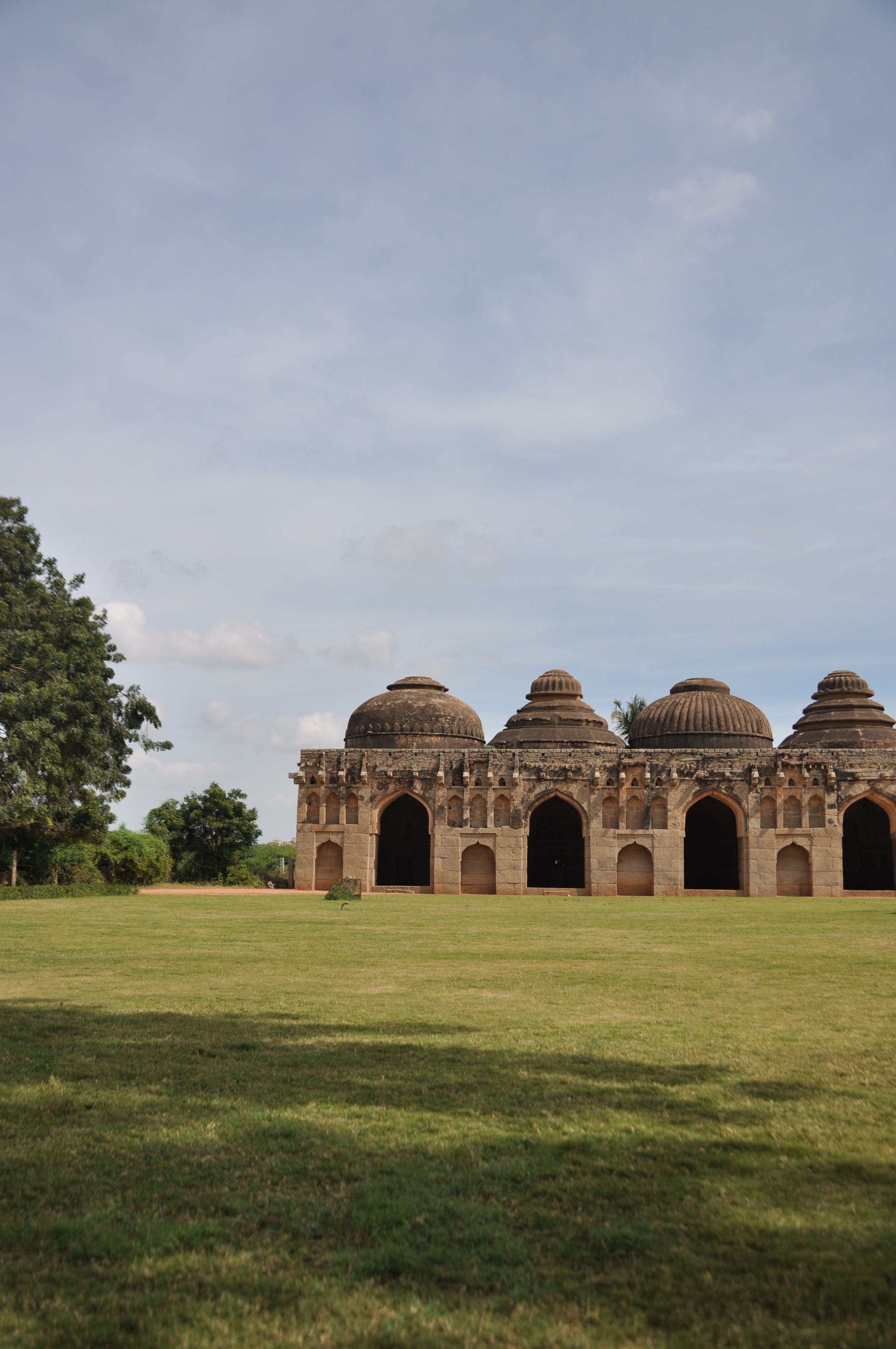
Among my favourites was an unnamed kalyani enclosed by finely carved colonnades, its green water set sharply against an impossibly blue sky. Another moment that remains vivid is the underground temple. As one moves through each descending gateway, the scale gradually compresses. The garbhagriha lies below ground level and floods during heavy rains. Wading through shallow cold water in near darkness, I felt an unexpected calm. Fish brushed past my feet as light reflected off the surface, casting fleeting patterns on the ancient stone walls. The Nandi stood at the centre, its surface polished smooth by centuries of touch and devotion. Later, we visited the royal complex — the Queen’s Bath, the Lotus Mahal, and the elephant stables. It was impossible not to imagine the life that once animated these spaces: elephants housed within grand domed enclosures, queens bathing in columned pools, the city alive with ceremony and ritual. As evening fell, we wandered through the bazaar streets, sampling food from near and far. Music drifted from distant rooftops, the air dense with overlapping smells of different cuisines. The following morning, we attempted to catch the sunrise from Matanga Hill. Clouds hid the sun, and rain soon followed, turning the descent into a slippery, exhilarating challenge. Crossing the river later that day, the view of the Virupaksha Temple from the boat felt painterly, almost unreal. On the island beyond, time slowed. Hammocks swayed, instruments produced unfamiliar sounds, and the ruins offered quiet spaces for rest and imagination. Standing there, it felt effortless to travel back in time — to picture bazaars heavy with trade, elephants and horses laden with riches, and music filling the streets. In that moment, I felt a quiet sense of belonging to the land and its stories. I knew then that this would not be the last time Hampi would see me.